Showing posts with label prejudice. Show all posts

Thursday, August 7, 2014

Random Thoughts: The Middle of the Sidewalk

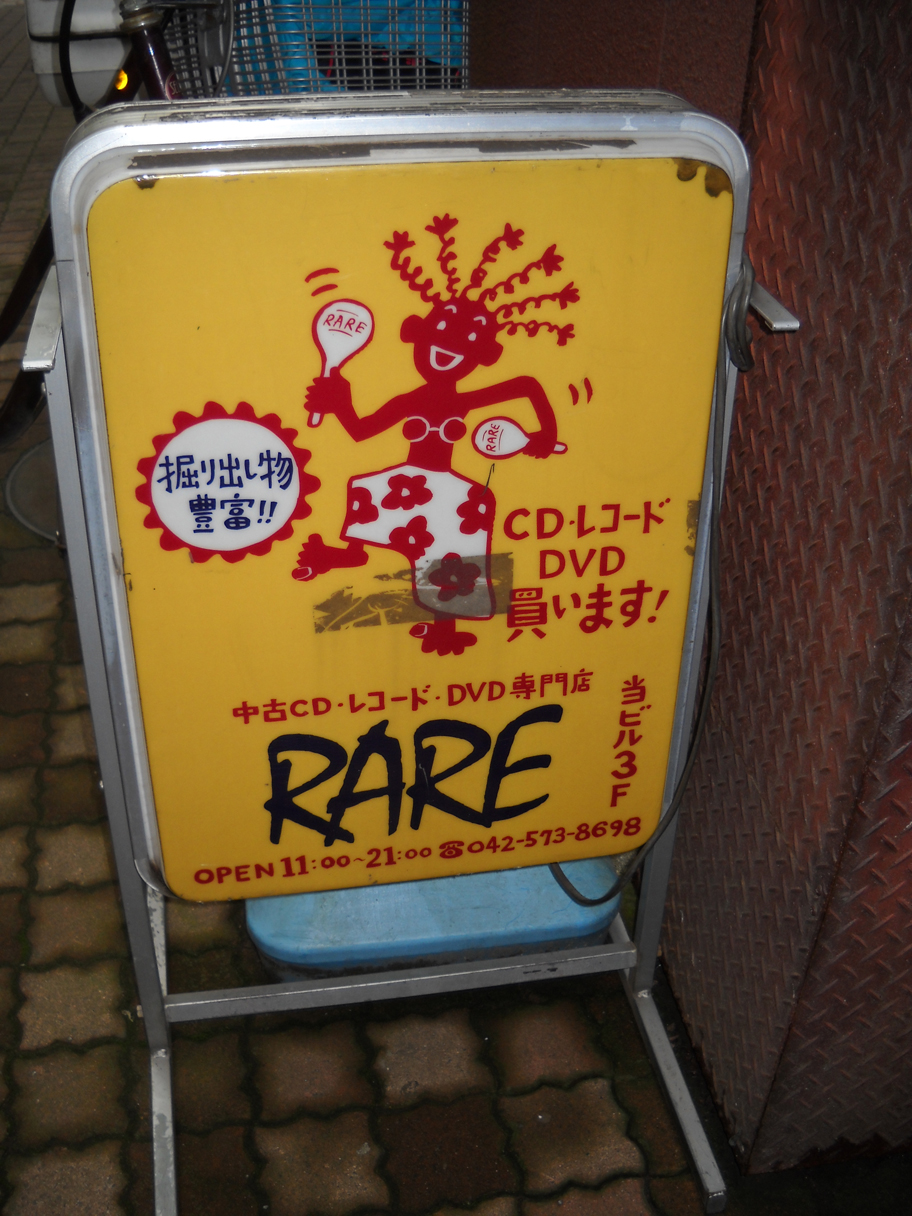
Seeing this picture of the sidewalk in Asagaya reminded me of the fact that Tokyo sidewalks are much wider than those in the U.S. I miss those sidewalks.

Recently, I was walking down a sidewalk of about average size and an older Asian man was coming the other way. I was walking on the right side and he was walking dead center down it. As I pondered the potential outcome of his approach should he stand his ground and I stand mine, I thought about whether or not I'd step out of the way if he decided that he was going to keep walking down the center. In the moment that my brain was processing those lightning fast thoughts, I concluded that I was not going to step off the sidewalk and walk in the grass (grass that was full of goose droppings as this was through a park) so this guy could walk down the middle as if he owned the entire thing.

As he got nearer to me and I didn't budge, he moved over and occupied the left side and we divided the space evenly between us as we passed one another. After this experience, which came and went in a few blinks of an eye (okay, maybe more like about 10 seconds), I thought about how things may have gone differently had someone of another ethnicity approached me while walking in the middle of a public space meant to be shared by everyone. The truth is that, had the other person been white, I would have done the same thing. However, had the other person been black, Hispanic, or any other ethnicity other than Asian or Caucasian, I would have moved onto the grass and allowed them to occupy the middle ground.

This thought was an interesting one and I believe that my "stubborn" insistence on equal division of the sidewalk with Asians (or Caucasians) was affected by my experiences in Tokyo. I spent over two decades around older males who arrogantly assumed they had the right of way, were entitled to as much space as they wanted to take, and who rarely, if ever, extended courtesy to those around them unless they were dealing with another man who was older than them or perceived as having higher status. I still see Asian males as acting entitled and believing they are superior to me and will take more than their share in my presence because I am a female and a minority, even though I have not necessarily experienced that in the U.S. at this point in time.

The fact that I believe I would have yielded to other minorities is the curious one in my estimation. I think that my sense with people who are neither Asian nor white is that they have had to step aside too many times already and that they've gotten less than their fair share over the years. I feel like they "deserve" more latitude, courtesy, and respect because history has given them so much less of these things than others. I will note that, in my experience so far, most white people are likely to yield prematurely and apologize when they aren't even in error. It's relatively rare to have a "turf war" with a Caucasian person in a public space, but that could be because I'm white, too. I can't not be white so I have no way of knowing if they treat minorities similarly.

One of the things that this brief experience made me think about is the sort of attitude that being in a minority group in a culture must engender over a lifetime of being treated with discrimination. Since I lived as a minority, and a particularly disempowered one, for so long, I developed an attitude when dealing with the majority in which I refused to surrender to their perceived authority or entitlement. Small experiences could become power struggles in which I wouldn't comply with their cultural imperatives or wishes as an act of rebellion. I needed those acts of rebellion because I had to prove to myself that I wasn't going to capitulate every single time my interests were at stake.

These small actions gave me a tiny sense of having some power at a time when I spent every day feeling powerless in much bigger and more important circumstances. While I couldn't stop store employees from following me around because they thought I was going to steal things or I couldn't force landlords to rent to me, I could stop some jerk from hogging the sidewalk or refuse to let him spread his legs so wide that he took up two seats on the train by just stubbornly refusing to physically accommodate him. I couldn't stop my employer from denying me legally mandated leave or benefits, but I could refuse to go to drinking parties or work on my days off (which nearly got me fired at one point).

As a result of this tug-of-war, one that I really was losing every single day, I spent a lot of years in Japan walking around mad - just mad. It took a very long time to stop being angry everyday because I was stared at, pointed at, bumped into by people who had no right to push me out of the way so they could get a superior situation, etc. There was not outlet for my sense that I suffered the inequality that I did. Foreigners in Japan are often apologists or deniers and the Japanese are utterly clueless or disinterested. There were no advocacy groups. I could not be heard and was shouted down (usually by other foreigners) on many occasions if I spoke or regarded as a drama queen or having a distorted perspective on what was occurring (usually by the Japanese). Years of not being heard only enhanced my sense of impotence in the society I was living in and kept my anger in play.

This is what happens to minorities when they are subjected to microaggressions or feel powerless or are treated disrespectfully on a daily basis. They're mad - everyday - much of the time - and in situations which seem trivial to those who have never walked a mile in their shoes. When you see a minority individual walking down the street with a nasty look on his or her face, I'm guessing that they are reacting to years of the sort of treatment that I had in Japan and the same sense that they cannot escape the reality of their world. It's partially a defense, but it's also part of a pattern of "winning" a few of the only types of "battles" that they have a chance of winning. You can't really know why they're so angry much of the time until you walk down a lot of sidewalks in their shoes. One of the more dubious "gifts" Japan gave me was a chance to occupy that place mentally and to know what it does to you psychologically. 

Tuesday, June 18, 2013

Won't Miss #23 - bigoted taxis (reflection)


I'm going to say something which probably sounds a little crazy, but bear with me. When I fill out a survey here in the U.S., and I do so more often than you'd think, I feel like I've somehow failed as a person when I have to check the box which says "white/Caucasian". Since I have returned, I've had "white privilege" tossed in my face so many times that I feel like I've done the part of America that gets to check other boxes a huge disservice by virtue of having been born with my particular genetics. I want to say, "please forgive me, I didn't choose this skin color!" Such is the life of a person living in a liberal state which makes sure to throw it in the faces of the "privileged" as often as possible that they are living lives of ease and comfort that others do not. There is a presumption that I can't possibly know what it is like to live as a minority and that I need to be "educated", and it needs to be happening constantly, to make me understand

My skin color means I can't possibly "know" what it's like for police to follow you and question you without cause, for clerks to be rude to you, or for taxis that you hail to drive by you... except, you know, I can and do. However, I still get talked at like I didn't live for over two decades in a place in which about .56% of the population was not visibly Asian in appearance and I was treated like an alien who'd just stepped off the mother ship on a daily basis. 

The truth is that, having been snubbed by businesses in Japan, I know what it is like to be on the other side. To the extent that I don't get treated that way now, I can understand the concept of "white privilege", though I quibble with the vocabulary choice. I think that what it really is is "minority disadvantage", but the words were changed at some point to make white folks feel like they're getting something they don't deserve and didn't earn instead of focusing on the fact that other people aren't getting something they deserve and shouldn't have to earn. It's meant to make one group feel guilty for what it has, rather than make that same group feel sorry for those who don't have something they should. Somewhere along the line, somebody figured making the majority feel bad created a better prospect for change than relying on their empathy and compassion for those who were being denied basic human rights and dignity. 

Because of my 23 years in Japan, I know what it's like to be treated like dirt because of your skin color, and the taxis in Tokyo that drove by when we tried to flag them down were one of the better indicators of that. I don't miss the way in which it made me feel like a lesser human being.

Tuesday, February 5, 2013

Won't Miss #509 - foreigners who don't want foreign friends


There's a knee jerk reaction that some (usually long-term) foreigners have toward other foreigners. They say that they don't want foreign friends and don't associate with other foreigners. Some of them have what sound like reasonable excuses, like they don't want to spend all of their time speaking English. Trust me when I say that no one spends so much time with a friend that opportunities to speak Japanese are seriously undermined. Others simply claim they don't like foreigners, as if we're all exactly the same and can be summarily dismissed. The bottom line is that this is a prejudice and a psychological problem that some foreigners have. I'm not suggesting that foreign folks instantly like or seek to become friends with other foreigners, but rather that they also should not instantly reject them based on being foreign either. If a person in America were to instantly dismiss an entire group based on some arbitrary characteristics, no one would see it as understandable or reasonable. They would see it for what it is, a form of prejudice.

I don't miss this bigotry that some foreign people adopted after coming to Japan.

Tuesday, December 11, 2012

Won't Miss #505 - being seen as incapable


AKB48, a manufactured girl group (with over 90 members) that discards members when they get "too old". They are clearly the product of a highly sophisticated culture. If you don't appreciate them, it is only because you are to simple-minded to comprehend.

In my previous post, I mentioned that the Japanese readily forgive foreigners for their bad manners or cross-cultural ignorance. If you take a business card and cram it in your pocket instead of looking thoughtfully at it and then placing it on the table such that you can view it, they won't be offended because they figure there's no way you could know their customs in this regard. While this may come across as tolerance, that is not what is really going on. It is more often than not the case that they feel that their culture is too complex, sophisticated, and difficult for someone from a less byzantine culture to comprehend. You are not seen as merely uneducated in their ways, but incapable of knowing them. This is why simple mastery of things like basic greetings in Japanese or using chopsticks are so highly praised. By acquiring even rudimentary Japanese cultural skills, you've overcome hurdles they thought you could never begin to vault over. It's like you are seen as a child who stacks blocks together to make a rudimentary house who receives praise for his efforts. 

When it comes to cultural understanding, many Japanese people operate from an unconscious (or conscious) sense that foreigners lack the sophistication to understand their ways. They believe you are the cultural equivalent of a developmentally disabled person. I will not miss this expectation that I lacked the capability to understand and follow Japanese customs. 

Tuesday, December 4, 2012

Won't Miss #5 - police harassment (reflection)


One thing that I can hardly go a day without reading or hearing someone talk about is "white privilege". The idea is, and it is certainly based on certain grim realities, that white folks walk around blithely reaping benefits from their pearly skin color without even realizing it. They get hired for jobs, accepted into schools, and are the beneficiaries of at least a couple of centuries of family status and wealth as a result of not being a part of a repressed minority.

As someone who grow up well below the poverty line, received free government cheese and powdered milk, was the child of a father who dropped out of school in 9th grade and did a blue collar job that left him disabled and a mother who only finished high school and went from one miserable and degrading minimum wage job after another when she wasn't having emotional problems, I never felt very "privileged". I paid for my own university. I have worked for everything I've gotten in life. No one has ever handed me a single thing, and there have been plenty of times when they've tried to take away what little I've had.

All of that being said, there is nothing like living in Japan and knowing what it is like to not have some aspects of white privilege to pry my eyes open a little to what it really is. The police in America don't harass me like they did in Japan. That is a piece of white privilege that I lost while living in Japan. Though certainly not the only one that vanished when I stepped off the plane in Tokyo, it was one of the most obvious and shocking. I still don't miss the fact that I don't draw unwanted attention from men in blue uniforms or get detained and questioned for existing while not being Japanese. 

Monday, September 10, 2012

Won't Miss #486 - "it's their country"


One of the things Japanophiles like to say to you if you are mistreated in Japan is that "it is their country." Essentially, they are telling you that the Japanese have every right to treat you like crap if they like because it is their country, not yours. This attitude is puzzling because it is rarely (if ever) used to justify mistreatment or prejudice against minorities or immigrants in Western countries. If a Japanese person is denied a chance to rent an apartment in the U.S. because he is Japanese, people are not going to say, "it's their country and they can deny foreigners if they like." They're going to yell about prejudice. This phrase is second to, "if you don't like it, leave" as one of the most irritating things Japanophiles say to anyone who doesn't have unconditional positive regard for life in Japan.

I won't miss hearing "it's their country" as a justification for unfair treatment.

Wednesday, May 23, 2012

Won't Miss #451 - my racism

If you travel, and you think that train stations are a snapshot of ethnic diversity in Japan, you're forming the wrong impression. You see more concentrations of foreigners in public transport areas than in real life. 

When I first came to Japan, I was, like most Americans, thoroughly entrenched in the idea that people were all the same aside from external appearances. As someone who grew up in a less than ethnically diverse rural town - we had poor white people, very poor white people, and somewhat middle class white people - my feelings about the differences between people were formed wholly based on teachings about what was "right" rather than actual experience. Since I was removed from the environment in the U.S., which is hyper-sensitive to matters of race, I was immersed in a culture which treated me with prejudice and objectified me. Through two plus decades of this, I was indoctrinated into a different pattern of thinking. That thinking is often "we are all very different, down to the blood, bone, and organs," not "we are all the same under our skin". What is more, being constantly objectified has made it easier and easier for me to objectify others. After decades of being an "outsider" (us) among "the Japanese" (them), I have started to treat them as they have treated me - as if their feelings and opinions do not matter and as if we are fundamentally different and always will be. Part of this thinking develops as a defense psychologically when a person is the object of prejudicial behavior, and part of it is living in Rome so long that you start to accept the Roman way of thinking.

We are all racist by nature (likely a genetically shaped survival trait) and it is only socialization that trains us and encourages us to curb said nature. I feel that, for me, the environment in Japan has stoked some very bad thought patterns and behaviors that absolutely did no exist prior to going there. I will not miss how living in a racist country has brought more racist feelings to the forefront in me. 

Wednesday, February 29, 2012

Won't Miss #423 - non-deodorant wearers


I realize there are people who stink everywhere in the world, but I encounter far more people with intense B.O. in Tokyo than I have anywhere else. The reason for this is that most Japanese assume they don't stink when they sweat and therefore do not need deodorant. In fact, many believe that only foreigners are capable of smelling bad when they sweat. There was once a sign near deodorant in a drug store which said essentially, "don't smell bad like a foreigner." Well, it's not only foreigners who can smell bad, especially in the hot humid summer, but even year-round. One of the workers at a local convenience store seems especially oblivious and I hate shopping there when he's on duty.

Men in particular seem to be unaware of the putrid funk they are subjecting bystanders to and I definitely won't miss the frequency with which I encounter these clueless stinky Petes.

Monday, February 13, 2012

Won't Miss #417 - black sambo-style images


I've said before that Japanese people aren't politically sensitive and that they also often do not realize when they are being racist (which is why activists are valuable as they can act to educate them on such matters). Nothing reminds me more of the cluelessness that Japanese people have about racism than seeing "Little Black Sambo" artwork (or similar types of drawings) around Tokyo. It's not like I see it on every corner, but I do see it often enough to make me cringe. I don't think these images are willfully put up to offend, but rather that there is complete obliviousness about how some people may feel about them.

The Japanese often talk about how their culture is much more sensitive about the feelings of others, but these images show that that sensitivity doesn't extend beyond people who they see as included in their own culture, and I won't miss seeing them.

Wednesday, November 23, 2011

Won't Miss #390 - dirty looks for English


I always get gawked at in public because of my appearance. Though I don't like seeing people do triple takes when they see me and just have to look back again and again, it's usually just basic rudeness. When my husband (who is also American) and I are out walking around, we, rather reasonably, speak English to each other. It's important to say here that we are not loud talkers. We speak at a reasonable volume, certainly no more loudly than other people having conversations and a good deal lower than more raucous groups of Japanese people or those on cell phones. However, when we speak English to each other, occasionally someone (usually a man), will whip his head around as if an insult had been lobbed like an errant glob of expectorant at the back of his head. A malevolent look, sometimes for the duration of our remaining in each other's presence, is directed our way. Recently, we were subjected to about 9 minutes of nasty looks and disgusted sounds for speaking to one another in the presence of a particular man while riding on a train. It's as if the very act of speaking our native tongue to one another is unspeakably inappropriate behavior and our insistence on continuing to engage in such behavior incites rage on the part of the offended party.

I won't miss people who think I've engaged in some sort of horrific social faux pas for having the audacity to speak my native tongue in public when having a private conversation with my husband.

Monday, October 24, 2011

Won't Miss #379 - the "lesser" customer

This woman at Adores gaming center was giving some sort of discount card or ticket to everyone who came in, but didn't offer any to my husband and I. This is despite the fact that we actually patronize their establishments

Walking down the streets of Tokyo or going into shops, you see people sometimes handing out free samples, tissues, coupons, and flyers. Ninety-nine percent of the time, you will be given a flyer regardless of foreignness. About a third of the time, however, you are not given tissue packets. And an even smaller amount of the time, you are given samples or coupons. I'm not sure what the deal is, but I can see when every person who walks by is offered something and I am not. It's hard to conclude anything other than it is highly likely that foreigners aren't seen as important enough potential customers to be given the same treatment as Japanese. There might be an assumption that we can't read what we are given or the people who hand out samples may have been explicitly told not to "waste" them on certain groups of people (including foreigners). 

I won't miss being seen as so unimportant as a customer that I am not extended the same benefits, small as they might be, as Japanese people. 

Friday, September 23, 2011

Won't Miss #369 - facial hair prejudice

Okay, this guy definitely isn't helping the image of facial hair, but give him a break. This picture was taken at a summer festival, not at the office. You'd all look less than ready for Wall Street in 93 degree heat and high humidity at a crowded public gathering.

When my husband came to Japan in 1989 seeking a job, his brother, who also lives in Japan, recommended that he shave off his beard. In fact, my brother-in-law for many years would remove his facial hair when applying for jobs because many Japanese companies view it as dirty, untidy, or lazy to sport facial growth. They tolerate beards and mustaches more from foreigners, but there is always a risk that you will lose a small edge in a competition for a job unless you are clean shaven. Personally, I find beards very becoming and they are, after all, the default state of a male face.

I won't miss the prejudice against male facial hair and the way in which it means you see very few men with beards in Japan.

Monday, April 4, 2011

Won't Miss #305 - mistrust of imported food


One of the bits of marketing that you find appears on some food designed to be fed to infants and toddlers, as well as the odd product for adults, is the fact that the ingredients are made in Japan. When a package says, "made with rice grown in Japan," I wonder why it even matters. I think one of the reasons is that many Japanese people don't trust the safety of food grown in other countries. In particular, they don't trust Chinese produce (and pot stickers, or as they are called here, "gyoza") and American beef. If there is an isolated incident with a product made abroad having a food safety issue, the Japanese media seize upon it and blow it to ridiculous proportions. When a Japanese company has the same issue, it's rarely mentioned. This has caused an enduring idea that only domestically produced food can be truly trusted.

The idea that Japanese food is the safest food in the world and one can spend more money on it in order to feel that little Taro or Mariko will grow up healthy and strong is clearly a marketing ploy, and it's one that I won't miss.

Tuesday, December 14, 2010

Will Miss #265 - (generally) liking Americans


One thing I learned pretty quickly during my first job in Japan, among which I had a plethora of coworkers from other English speaking countries, was that many people dislike Americans. They haven't been to America, nor are they particularly well-educated about it, but they don't like us. They think we are our politics, our politicians, our business practices, our fast food, our laws, and our wars, and they think consuming popular entertainment or selective bits of news is authentically educating them about America. They don't seem to realize that we are people, just like everyone else, and it's not fair to hold us as individuals responsible or to blame for the larger aspects of our society which are just as out of our control as similar aspects are out of theirs in their home countries. These are the sort of people who would react to assertions like "I hate Indians/Mexicans/Japanese" with the (quite justified) response, "bigot", but fail to see the hypocrisy in their knee-jerk dislike of Americans. The most common America-haters are Canadians, but they are kept company by Australians, the British, and New Zealanders.

Japanese people, on the other hand, generally like Americans as a first response and Japan is one of the few countries that you can visit without fear of anti-Americanism quickly smacking you in the face (provided you aren't around too many other foreigners), and I'm going to miss that.

Tuesday, December 7, 2010

Won't Miss #263 - blaming foreigners for drug sales


If you read a story about a Japanese person who is caught with drugs and arrested, there is a high probability that it will be mentioned that the detainee will be asked where the drugs were obtained and the answer will be, "I got them from a foreigner". The fact that this information is included for routine drug busts (like someone caught with marijuana or stimulants) for small amounts of drugs is somewhat curious in and of itself. The fact that no one ever questions whether or not the drug user who is being held is telling the truth about where the drugs came from is an indication that merely saying, "I bought them from a foreigner," is explanation enough.

I won't miss this tendency to link (mysterious) foreigners with drugs in order to deflect responsibility for the crime for the Japanese perpetrators to non-Japanese.

Monday, November 29, 2010

Won't Miss #260 - Caucasian elevation


If you're white in Japan, you automatically have value based on skin color alone. Many Caucasian foreigners, particularly men, love being seen as special and relish being the favored pet that is fawned over and spoken to with adoration. They're the best of breed among the kennel of foreigners. If you're black, you're a bit out of luck in the gaijin pet show because many Japanese tend to regard black people as more likely to be criminal, animalistic, and less educated. This is an opinion that is hard to come by because Japanese people tend to hide their true opinions from foreigners (who they know mostly disapprove of racist notions), but it is there. Some of my students have overtly told me their real opinions on this matter (particularly that they believe black people are stupid or dangerous), and others have confirmed that, while they don't feel that way, they believe many other Japanese do.

While many white foreigners feel fine with being treated as special in a positive manner based on skin color, I'm no more comfortable being regarded favorably for my skin color than I am being treated badly for it, and I very much won't miss it.

Wednesday, October 27, 2010

Won't Miss #248 - Softbank


My issues with Softbank are two-fold (at the moment). First, if you sign a contract with them and you are not Japanese, you must provide two forms of official identification such as your alien registration card, passport, or government issue health insurance card. If you are Japanese, you only need to provide one piece of official identification or two very flimsy pieces (like student I.D. and credit card). This is discrimination, pure and simple. I don't know why they require foreigners to give two types of official I.D., but the only reason I can think of is that they think we're criminals carrying one well-constructed fake. The second problem I have with Softbank is that they won't answer some questions when you stand right in their shops face-to-face (speaking Japanese). My husband had a question about connecting to their Wi-fi via iPad and they told him they wouldn't answer his question in their cavernous shop which was at that moment utterly devoid of customers.* They said he had to call a number on a brochure. This is pathetic customer service.

I won't miss Softbank's policies or "service".

*Note: He asked in Japanese, so it wasn't a language issue.

Sunday, August 15, 2010

Won't Miss #218 - train seat pariah


One of the earliest indications that you are regarded as unappealing in the eyes of some Japanese people is the fact that they will get up and leave their seat if you (a foreigner) sit next to them. There's also the fact that people will choose not to sit next to you if you are a foreigner. Some foreigners believe that this is somehow the result of foreign folks doing something "wrong". They excuse this behavior saying the foreign person must smell bad, be too fat and take up too much seat space, or make eye contact and therefore make the Japanese person nervous. That's a crock concocted by apologists. Japanese people get up if you sit next to them or refuse to sit next to you because foreign people make some of them nervous or uncomfortable simply because they are foreign, not because there's anything wrong with them. It has nothing to do with us personally and is just another manifestation of prejudice and ignorance.

I'm not going to miss these overt gestures that show that I'm somehow less appealing merely because I don't look Japanese.

Wednesday, August 4, 2010

Won't Miss #212 - English warnings


The Japanese sales ethic is all about copious amounts of courtesy. You would be hard-pressed to find a written warning or caution for customers in Japanese which was written in rude language. On the other hand, it is quite easy to find rude or outright profane messages for customers written in English. You also find that many security-related messages are written only in English. In particular, you find that messages stating that an establishment is being watched by security cameras are written only in English. The underlying messages are clear in both cases; it's okay to be rude to non-Japanese customers and only non-Japanese customers may commit crimes so security messages need to be delivered in a language other than Japanese. The fact that not every message in Japan is offered bilingually underscores this viewpoint.

I won't miss these little reminders that foreigners are to regarded with suspicion and deserve less courtesy than the natives.

Sunday, July 11, 2010

Won't Miss #200 - lack of cultural sensitivity


The flip-side of the previous post about a lack of political correctness is that there is also a lack of cultural sensitivity in Japan. The same attributes which stop Japanese people from overreacting and applying hysterical political correctness to certain words or issues fuels their lack of understanding about what can be seen as or is an offensive portrayal of people from other cultures. Stereotypical views of foreign people that reflect ridiculous accents, big noses, hairy faces, bushy Afros, and thick lips can be seen in costumes sold in Japan, product packaging designs, and advertising. The grossly stereotyped versions of foreigners in Japan which I see in the present day are the equivalent of the buck-toothed, bespectacled, yellow-skinned cartoons of the Japanese from around the time of World War II. We are sensitive to showing them in such an offensive manner, but they are clueless about how offensive their portrayals of us are. Attempts to draw the attention of persons in authority have met with defensive reactions which are the equivalent of, 'these images aren't for foreign people to see, but are for we Japanese.'

I won't miss this lack of sensitivity about the portrayal of other people and cultures.