Showing posts with label work. Show all posts

Tuesday, January 21, 2014

Won't Miss #533 - fear about retirement


One of the things that we all have to face as we get older is how we're going to look after ourselves in our old age. No matter what country you are in, this is something of concern. My husband and I saved a fairly decent nest egg (which we are now using to pay for his graduate school and life expenses) while in Japan, and no doubt that nest egg would have continued to grow had we stayed in Japan and continued to save money. That being said, it would not have been the same as having an actual pension or social security.

Part of the problem with living in Japan for foreign folks is that you have to pay into the pension system for 20 years in order to get anything out of it. My former company, at which I had worked for 12 years, ignored the law in regard to the foreign employees and did not pay into pension plans or the government retirement program which is equivalent to social security. Had they done so, I'd have been able to transfer that and accrue Social Security in the U.S., but I didn't even know that they were breaking the law until the company was acquired by a more lawful one 10 years into my employment there.

The specter of what was going to happen when we were too old to work was always with us. We both knew we'd have to return to the U.S. and work there to get something in order beyond our savings. I don't miss worrying even more about retirement as a result of being in Japan. 

Wednesday, October 16, 2013

Random Memories #52


This is part of an ongoing series that I've been doing about my memories of working at the same place for 12 years. This is a continuing series talking about the time I spent working in a Japanese office. The other parts are here: 12345678910.

As the company's fortunes continued to decline, the necessity of having a third full-time employee started to diminish. When Amelia left, my final permanent (as opposed to temporary, not as in actually there "forever") co-worker was hired. This final fellow was another Nova language school (eikaiwa) refugee.

Scott was a very affable fellow who did not take himself or the job too seriously, mostly the former. That is in no way an indication that he didn't do the work. He did what was put in front of him without complaint, but he rarely got too worked up about all of the office antics and ridiculousness that went on around him.

The fact that Scott didn't take work too seriously in terms of how he approached it was revealed in what he told me about his time at Nova. Like many new teachers, he was scheduled to work on the weekends and hated working on Sundays in particular. When he didn't want to work, he'd simply call the head office on that morning and say he was sick. Of course, he wasn't sick. He just didn't want to work on Sunday. This happened so often that the people in the office came to expect his calls and recognize his voice. They'd say, "oh, hi, Scott", and anticipate what was coming.

When Scott did this, he wasn't paid the wages for that day of work, but this was before the days when Nova initiated economic penalties on teachers for short-notice calling in sick. I'm sure that people like Scott were a part of their rationale for instituting policies in which they'd dock teachers several hours of pay for being marginally late and requiring proof in the form of a doctor's note when a teacher claimed to be ill. I wouldn't be surprised, given how reactive the Japanese management could be, if Scott single-handedly didn't motivate this policy. After all, Draconian responses to single incidents were hardly uncommon in my experience.

Fortunately for us, Scott didn't hate working so much that he'd call in sick on a regular basis with us. The truth was that he appreciated the job as much as I did for the lack of face to face content. However, that didn't stop Scott from toying with the students at times, but not in the same mean-spirited and condescending way that John had. He mainly messed with them at his own expense by continually changing his personal data to elicit new and different questions.

On his profile sheet, Scott stated that his hobbies included watching movies, listening to music, and dance. When the students asked him questions about what sorts of these things he enjoyed, he kept things interesting for himself by giving different answers. Sometimes, he said he like Ska music, even though he didn't know what it was. He said his favorite actor was Harvey Keitel, but he didn't know enough about him to say which movies he'd been in and he at one point said he liked ballet even though he had zero interest in it.

Scott was someone who seemed to just fall into whatever he ended up doing. When I asked him about his former work, he said that he was a sports commentator for basketball for a local entity as well as a sports writer for awhile. We're not talking someone who was a Howard Cosell or even a Jack Buck. He was more like a glorified emcee at a high school basketball game. The odd thing was that he didn't even like basketball, but this was a job he could do so he did it.

Scott's real passion was writing. In fact, during his tenure at my former company, he worked on a novel by the name of "The Man With the Golden Penis". I had a tendency to make fun of Scott for his goofy demeanor and speech habits, so that was one that I couldn't pass up and I'm sorry to say that I perhaps had a little too much fun with this easy target. He allowed D. (the manager) to read it, but understandably had no interest in allowing me to take a gander at it. I wasn't exactly offended by this and D. pronounced the work decidedly odd.

I don't know if Scott ever finished this work and published it online or through a personal publishing house, but I can say that someone with his name has done some baseball writing. I can also say that I'm too afraid of the search results if I use the words "golden penis" to see if his novel ever made it online.

In terms of his telephone relationship with students, Scott dealt with them relatively respectfully and he didn't take the job too lightly, though he did have some ways of talking about the students which were unique and apt. One of the problems that all of us instructors struggled with when we did phone calls was that they would insist on calling us by "Mr." or "Ms." plus our first names.

Time and time again, I would hear Scott wrestling with a student who would call and ask to speak to "Mr. Scott". He's say, "just 'Scott', no "Mister". He's say this two or three times and give up. On one occasion, the student, after saying, "Mr. Scott" several times and hearing "just Scott" in response, finally said, "just Scott!" At least it was better than "Mr. Scott". After such episodes, Scott would say that sometimes talking to the students was "like talking to a dog". They just seemed to lack the ability to comprehend what was being said, even when their textbooks and pre-telephone lesson training materials primed them to do the right thing.

Scott lived with his Chinese girlfriend who worked as a dental hygienist and one of the weirdest misunderstandings that I ever had with him occurred over a discussion that related more to Jolene's situation and that of other coworkers I'd known that his. D. and I were discussing the hardships of cross-cultural relationships and how they presented particular challenges that must make life difficult for those involved in them. At one point, Scott said with great agitation, "now that's enough!" Apparently, he thought that we were trying to send him a message and he and his girlfriend weren't going to work out. The truth was that his situation was nowhere in our minds at all.

The president, who could be incredibly mercurial and unpredictable about how he regarded the foreign employees, liked Scott quite a lot. I'm not sure if it was his affability, his goofiness, or the fact that he was tall, but Mr. O. liked him and let him do things he wouldn't allow other teachers to get away with. One day, Scott sat in his booth and surreptitiously tried to eat a banana because he was hungry. The president noticed his attempts to hide his eating and said, "Eat, eat!" This was in stark contrast to what the big cheese said to another teacher who he docked 10 minutes of pay from for having the audacity to eat in his cubicle.

I can't recall exactly how long Scott was with us, but I think it was either a year or between a year and two years. He decided to head back home to Michigan and try his luck at finding a career there. This created a bit of an issue for him because his girlfriend had a great deal of difficulty going to the U.S. with him. He got in touch with us about a year after he left and told us that, even if he married, she wouldn't have been allowed into the country because the doors were not open wide for Chinese immigrants. I have no idea what became of their relationship, but I did feel bad that two people in a legitimate relationship were being kept apart by immigration laws.

Scott actually returned to Japan to visit and popped by our office. He used to wear glasses, but had lasik surgery, so he came back with two fewer eyes than when I last saw him. I think he might have liked to return to the company and work again, but it had shrunk in size sufficiently that they no longer needed more than my presence as a permanent instructor. The last I saw of a now glasses-less Scott was at our old office as he bid us goodbye and headed out back into the city. Like all of my former coworkers, even the ones who hated me, I attempted to track him down, but have not had any luck yet. I'd like to think he married his girlfriend and found a career suited to his particular talents and nature. The world needs more affable goofs and they deserve to be rewarded. (to be continued)

Update: I contacted Scott via Facebook and he did marry his girlfriend and essentially has lived happily ever after with a 12-year-old daughter and is running his own business along with his wife. I'm always pleased when someone who deserves a happy ending gets one!

Wednesday, August 21, 2013

Random Memories #44


This is a continuation of a sequence of stories on working in a Japanese office, an experience that I had over 12 of my 23 years in Japan. Here are parts 1 and 2.

In the previous post, I introduced information about my former company, which I believe was like a lot of little companies in Japan in that it operated as the private fiefdom of the man who ran it. The company survived, in part, on the largess created by Japan's economic boom times, but also on laws and loopholes meant to keep employment levels high and allow companies that were not especially competitive to continue to exist.

Over the years, the number of such companies has slowly decreased as tax codes have been changed and laws less oriented toward keeping such businesses alive, but there are still likely thousands of them all over Japan. I believe, and this is pure speculation, that this is one of the reasons you see tiny shops that occupy a niche of the market, never seem to get more than a handful of customers, but continue to stay in business for decades.

In terms of our company, Mr. O, the president, was essentially the master of his domain. Once the company expanded to the point at which he no longer operated as a salesperson, he spent most of his days meddling in the affairs of whatever section he felt could "benefit" from his attention. For many years, he mainly fiddled in sales because he felt that was an area in which he had expertise.

Indeed, he may have had skills at one point or another in time and some important knowledge to impart. When I first joined the company, the salespeople would gather around a meeting table in his lavish office and he would hold them as his captive audience for hours. As sales continued to tank, in part due to changes in the tax laws that cut out breaks for companies for English training that went beyond the most basic level and in part due to the bursting of the bubble economy, he lost interest in managing the sales people. After all, if he kept instructing them and sales did not improve, then it would mean he failed. It was far easier to blame the sales people than to take responsibility himself.

After the president took his finger out of the sales pie, he turned to our section's efforts in regards to writing textbooks. His English was so-so, and he had no knowledge of how to publish, edit, or write, but this was a product that was not directly related to his expertise and he could get in our way to his heart's content without feeling like he could be blamed.

One of my earliest experiences with this was his thwarting any efforts we made to modernize. When I started at the company, they were using a paste-down method and I wanted to update to using digital publishing. He insisted that the "homemade" look was part of the company's "know how" and I had to keep using a ruler and a special "gum" to create pages that the publisher would take pictures of and convert into printing plates. It was only after the printer refused to do this anymore as they had converted to digital that he magnanimously permitted me to use my own scanner, laptop, and copy of Pagemaker to do the job properly.

When Mr. O wasn't too busy interfering with our jobs, he spent much of his time deciding how to rearrange the office. At least twice a year, he'd pore over elaborately drawn plans and figure out how to move our desks and change our work spaces to suit his whims. There was never any rhyme or reason for this, beyond the fact that the foreign employees always had to be close enough to his office so that he could keep us within sight and earshot so that he could tell us what we did wrong. He also made sure that the foreigners always were seated on the side of the office that had the fewest or no windows and was the hottest in summer and the coldest in winter. If there was an unattractive area for your desk to be placed in, we were placed there.

When he got bored with meddling, rearranging the furniture tended to keep him entertained. Never mind that all of this caused a huge disruption in workflow for everyone else. The Japanese staff gamely came in early, stayed late, or gave up their entire weekend to cooperate with his games of musical chairs.

The president also had a flaw common to many people who are placed in charge and who lack empathy for their subordinates. Every time one tiny thing went wrong, he'd create a new and quite punitive rule. This was bad management, but it helped him deal with his frustration over any little thing going awry.

My shift was 11:00 am to 7:00 pm when I first started working for the company. The last two hours were always occupied by two hours of talking on the phone as part of the correspondence course. The way it worked was that two people were to call in the first quarter hour, then three in the next quarter hour followed by another round of two and then three. Each call was five minutes so every other fifteen minutes was tight and we had to adjust the time as needed if someone called outside of the rigid structure of the schedule block. That is, we'd give someone only four minutes or run a little late into the block with thetwo people that followed.

As one might imagine, this scheduling was tricky at the very end of the day. If three people needed to get through from 6:45 to 7:00 and one was late, we'd run past 7:00 pm or give a very short call. We weren't allowed to give less than three minutes, so someone who called super late just stole our time and there was nothing we could do about that. The second-to-worst ones would call at 6:59 and hold us up for the duration. The worst ones would call at 7:00 on the dot.

Because we didn't want to be leaving late (and not be paid for the time), each teacher would be sitting there watching the digital clock on the phone like a hawk and turn the switch off the second it clicked over to 7:00 pm. One day, a single student called and complained that he had called at 6:59 pm and not gotten an answer. As a result, we were all told that we couldn't turn the phones off until 7:05.

It may seem very petty that we cared so much about the theft of a few minutes here or there, but it's important to keep in mind that the president did not respect our work. It wasn't only that he put us in the darkest, most uncomfortable spot or watched us like a hawk because he clearly mistrusted us, but also a plethora of choices that added up to showing he had zero respect for us.

One example of this could be seen in the way he arranged to buy office treats for tea time one day a week. None of the teachers worked on Mondays and that was the day that he chose to buy ice cream, special beverages, or snacks for all of the office workers. Every Tuesday, we'd come in to find the refrigerator full of the things the staff had chosen not to eat.

Another example of this was the fact that the Japanese staff got to take a tea time break at all. At around 3:30 or 4:00, they'd all head for the kitchen for tea and then sit in a lounge area and read newspapers or chat for about 15-30 minutes while we worked on.

Beyond that was the fact that our concerns were never taken seriously, even when we had a legitimate point. The air conditioning system operated by having a sensor on one half of the unit that managed the temperature control. The president had included the sensor in his enclosed office space and we were on the other side without a sensor. In summer, his office would get super cool in the enclosed space and ours, which was bigger and more open as it had to accommodate more people, would stay hot.

We'd be sitting in summer with hot air blowing on us and it was a constant fight to get the air conditioner set low enough so that we wouldn't be in a well-heated room. The president didn't see this as a practical matter, even as his daughter verified that, yes, the air conditioning was spewing heat. He saw it as a power issue. He wanted the AC set at 26-28 degrees C. (79-82.4 degrees F.) and we needed it set at 23 (73.4) in order not to be blasted with heat of around 29.4 C. or 85 degrees F.

It wasn't an issue of us wanting it colder, but the problem with the mechanical system. The president saw our request as a pissing contest that he was going to win. He felt we should "gaman" (endure) the discomfort because that is what he believed subordinates should do. It took weeks and weeks of suffering before he'd concede that we were experiencing temperatures hotter than those outside on most days. You don't know what hell is like until you're working in a heated room in summer because of the petty need to prove ones power over ones employees. Humane working conditions never entered into his thinking. It was all about status and power.

The president got upset that the foreigners did not have the work ethic of the Japanese, but he treated us like bad dogs that had to be whipped to kept in line. How much company loyalty did that inspire? Beyond the idiosyncratic choices he made that always worked to our disadvantage, there was also the fact that he gave us piddly raises when he gave us raises at all and that he divvied them out based on gender.

My male coworker, who did the basic phone and correction work, got a 10,000 yen raise ($100) a month while I got 2,000 yen ($20) despite my desktop publishing, writing, and editing work on top of the usual work. The differences in our raises were only because I am a woman. His logic was that my coworker being a man meant that he had to support his "family" and that meant his wife, who also had a full-time job so they weren't exactly struggling for their daily bread. The irony was that my husband was studying Japanese full-time and I was the main breadwinner, but the facts absolutely did not interfere with his notions of what was "right".

Beyond all of these issues, Mr. O almost fired me for refusing to work on a day off as well and he had a habit of dismissing every foreign employee after three years of employment regardless of how hard they worked because he preferred to have "fresh faces". I stayed for 12 years largely because my Australian boss convinced him of the pragmatic concerns. He knew they were never going to get someone with my skills for the wages they offered and his workload would have increased greatly without my assistance.

I don't mean to paint Mr. O as entirely bad, though there certainly was little that tended to be "good" about him objectively speaking. There obviously was a reason that I remained for 12 years. Mr. O wasn't any part of it though, but I'll get into that in the next piece. 

Thursday, May 30, 2013

Will Miss #23 - relationship with my students (reflection)

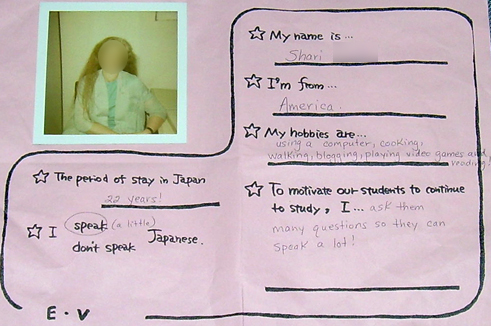
My teaching profile sheet from my last job at an eikaiwa (conversation school). 

Hands down, this is the one thing that I can say without reservation has gotten harder to bear over time. My relationship with my students was not one of friendship or scholarship, but more of a therapeutic one in which I largely functioned as a counselor and they as clients. The biggest part of good therapy is that you listen respectfully, attentively, and with empathy and get people to talk about themselves as much as possible. The biggest part of good conversation teaching is that you listen respectfully, attentively, and with empathy. There is a bond of trust that you build over time that cannot be easily replicated in any other relationship. From my point of view, the teacher and student relationship was better than that of a client and counselor because there was no expectation that I'd solve their problems, but only that I'd improve their English. The latter is a far easier task than the former, and with far less dire consequences if one fails.

The relationship I had with my students was close, deep, and authentic. I miss talking to them and knowing that I was helping them in multiple ways, and I doubt that will ever change no matter how many years pass since my departure from Japan.

Wednesday, May 1, 2013

Random Memories #32


Note: This is somewhat of a continuation of my two previous posts (here and here), though it is not necessary to have read them to follow this.

It has often been said that people get the government they deserve. I believe this is true. I also believe that, in the 80's in Japan, language schools got the types of teachers they deserved based on how they hired them and how they were treated. If a company concerned itself with the possible quality of instruction, experience, and personality of each teacher, it was going to get a better employee than one that cared only about how your paperwork could be processed at immigration, your age, and your physical appearance. Nova ICI, one of the biggest conversation schools in Japan for quite a long period of time, cared only about the latter in 1989, and the types of teachers it tended to attract reflected those priorities.

In terms of how Nova dealt with instructors, the superficial aspects looked pretty good. They promised steady hours and steady pay. A new teacher was to work 35 hours for 250,000 yen ($1,953 in 1989) up until their probation ended (3 months) and then their salary would increase to 290,000 yen ($2265 in 1989). That sounds all well and good, but after I started working at Nova, the rumors of how things really worked started to fly. 

One of the things that tended to happen at Nova was that they would permit some people who did not have a qualifying Bachelor's degree (which you must have to get a proper working visa) to work on their tourist visas when they got desperate for bums in seats. This explains to some extent the economics of the probationary pay. A tourist visa lasted 3 months so anyone who was doing a temporary gig would get the reduced pay and then walk away before the higher rate could kick in. 

If they wanted to take their chances, they would hop a boat to Korea or fly outside of Japan for a spell then come back for a fresh tourist visa and spend another three months. This worked for some, and not so well for most as the immigration folks at the airport could smell someone who was coming back to work on a shiny new tourist visa. Well, they couldn't so much smell it as work out that anyone who remained up until the cusp of their visa expiring and then left for a brief time was likely coming back to work illegally.

At any rate, the most pernicious rumor at Nova regarding teachers was that they would cheat you if you gave proper notice. That is if you said you were going in a month, they'd withhold and keep 2 weeks salary and not pay you what you were due. I don't know if this was true, but it was widely believed and teachers were constantly bugging out without notice based on this belief. If you bugged out at just the right moment, the most you could be cheated out of was a few days of pay. If you did the right thing, you would lose a great deal more.

In my school, we had two British folks who were working on tourist visas. One bugged out without notice when his three months were up. I remember the manager coming up to me and asking me if he was ever coming back and feeling uncomfortable admitting that I knew he was not. The other teacher had a craftier way of getting around the lack of a Bachelor's degree. She had worked at a professional printer back home in England and she flew back to make her own false document. For her, this worked, but I know other folks who tried this and failed. I guess the mail order ones didn't work as well as one that you custom-made with your own two hands. This fake served my former coworker well as she continued to work at various jobs in Japan on that fake diploma.

Nova was aware of and actually condoned the acquisition of such fake documentation at that time. My guess is that the current version of that company, which is ran by different management and likely has had its shady practices completely cleaned up, does not in any way support this. How do I know that they supported this in the distant past? There was a very popular Australian teacher who lacked a degree. He was very popular with the lower level students because he was a gas bag who could talk his way through the entire lesson without placing much in the way of demands on the students. He taught there for 6 months on a working holiday visa, a visa which allows people from certain countries to legally work in Japan, and it was coming to an end. Nova management wanted him to stay, so they encouraged him to go procure the false diploma to allow him to be sponsored. They even pointed him toward Hong Kong, which apparently was a good place to get a fake degree back in those days.

You might think that Nova's sloppy hiring practices and skirting the law in order to hire teachers is no big deal. So what if they don't ask about your teaching skills, experience or techniques? So what if they encourage people to buy diplomas to get around a requirement to have a Bachelor's degree? If you believe as many people do that foreigners who work in English conversation schools are little more than monkeys who are there to amuse bored housewives, school kids, and indifferent businessmen who are forced to study English, then none of that matters. A monkey with a diploma is little different than the chimp without one. They can all dance for the natives, right? Well... no.

I'm not going to try and convince you of the idea that a person who completes a college degree is somehow a different type of employee than one who does not. You're either going to buy that (most likely if you have a degree) or not (most likely if you don't). I can tell you that I spotted the liars who never finished a university degree long before they confessed or got caught. There is a difference, and it's not even about how intelligent they are, but that's not what I'm leading up to. What I'm leading up to is the fact that Nova's attitude toward teachers resulted in worse than monkeys with fake credentials.

This is a story I have told before, in a blog a long time ago and far away, but it belongs in this post so I'll tell it again. One day my British coworkers (the one who printed her own degree) and I were walking down the street in Ikebukuro. We reached a light and as we waited, a tall foreign man who seemed to be in his 30's or 40's approached us and stood with us. He started talking to us about how the Japanese hated foreigners and felt we were beneath them. He said they were like Nazis and had contempt for all of us. I knew from the look in his eye and the way he spoke that he was mentally ill. I'd worked and lived with people with an array of serious mental disorders, including schizophrenia, for two years and I know what that disease looks and sounds like. My friend was taken aback and simply responded to his rant by saying, "well, it's their country." The light changed and we walked on our merry way.

Two weeks later, I came into work at Nova and this man was there gathering up student files. They had hired him as a teacher. I was shocked, to say the least, and I felt that, given his opinions of the Japanese as he professed on the street, it would be bad to put him in a classroom with students. I went to the manager and told her that I strongly suspected that he was mentally ill and I told her the types of things he had told my coworker and me. She nodded and said, "mmm," and thanked me and did absolutely nothing. This was a good example of the type of thinking I came to expect in Japan. That is, they would worry about crossing that rickety old bridge only after it had collapsed and killed anyone walking across it. It didn't matter if an engineer guaranteed that it was going to go and go soon, they'd simply ignore it until it could no longer be ignored. 

Within the coming weeks, this man's mental illness started to manifest. He didn't bath and started to stink. During the lessons, he told students that his dead father was in the cubicle with him and was speaking to him during the class. He became increasingly erratic and sometimes shouted at students in the class. The students, being passive and not wanting to embarrass anyone, tolerated this for a little while, but even they couldn't bear it for long. The Japanese are patient people, but no one can stand being in a tiny little room with a smelly, mentally ill person for long and "gaman" (endure), particularly when they are paying for the indignity of it all. After about a month, Nova finally sacked this man who should never have been hired in the first place.

The reason this guy got hired was that Nova didn't care about who he was or what he was going to do in a class. They looked at his visa and determined they could legally get his ass into a seat. The potential damage of their hiring practices went beyond simply putting unqualified monkeys into seats or even losing business. Given his delusions about the Japanese hating on foreigners and judging them, it's hard to know what he could have been capable of. As it was, he was capable of verbally abusing the students and making them very upset by sharing his hallucinations in the class. It could have been very much worse and the attitude at Nova toward hiring foreigners was entirely to blame.

Wednesday, April 24, 2013

Random Memories #31

This is the thing that got me my first job in Japan. 

Note: This is somewhat of a continuation from my previous post about getting jobs in Japan.

Some moments in life are burned into your memory with perfect clarity. This is not so strange. What is odd to me is that the ones you recall with photographic-memory-like clarity are not necessarily the ones that are the most meaningful. For instance, one of the happiest memories of my life is getting married to my husband in the world's smallest, simplest, and most economical of weddings. We were both happy to be doing it and wrote our own vows. However, the only "memory burn" I have from that day is standing outside of my in-laws' home (in which we were married) waiting for the music to reach the right spot so that we could walk in together. The emotionally deeper parts are only revealed to me via our poorly shot wedding video.

At any rate, you'd think that memories of my first day on the job as a teacher in Japan would be a pretty potent memory, but I don't remember it at all. I do have a flash of memory and corresponding emotion from the interview in which I "got" the job. I recall being very nervous and very hot and sweaty (because it was Tokyo in late spring and the weather was appropriate for steaming open a clam) and going into a large room with a white table with a guy wearing a dark business suit who spoke English slowly and adequately. He never made eye contact with me, and spent most of the time looking down at paperwork of some sort or another.

The first question the man asked me was about my passport. He wanted to see my tourist visa. I gave it to him and he looked at the 5-year tourist visa that I'd obtained about a year earlier when I visited my then-boyfriend-now-husband. After some careful inspection of the visa, he said, "we can change this visa," and handed me back my passport. From then, he proceeded to tell me about working conditions at the school as I waited to be "interviewed" further. I  was not asked any other questions. I was hired based on the type of stamp in my passport.

If you've ever wondered about the well from which the idea that English teachers in Japan are useless, worthless, and unskilled is drawn, this type of thing in the old days was a part of that. The demand for fresh blood was so high that conversation schools (eikaiwa) were less concerned with how well you could teach than they were with how quickly they could get your ass into a seat across from their students. My visa meant that I would not have to leave the country to process my paperwork. At that time, you had to pop over to a foreign country (most often Korea), and get this type of tourist visa from the Japanese consulate before you could qualify for a certificate of eligibility to get a work visa from within Japan. 

In later years, this pointless requirement was removed. However, in the late 80's when I was there, this was a bureaucratic end-run around the idea that you weren't supposed to come to Japan as a casual tourist and then get a job. I'm not sure how my tourist visa made me different from tourists who didn't have such a stamp, but I'm guessing it had something to do with red tape that said you had to have the equivalent of a re-entry permit or some other such nonsense. In fact, my husband, who went to Japan shortly after our wedding to find a job first (while I remained in the U.S. and continued at my job), did not escape playing this game. He got a job, but he had to fly to Korea and stay for a few days while the paper pushers danced their little dance. That's what he got for not having the right stamp in his passport. 

It's interesting to note that Nova, the joint that hired me, did not hire him because of his lack of said stamp. Though he had a year of teaching experience and interviews exceptionally well, they didn't want him because they'd have to process his paperwork differently. They didn't ask him any questions at his interview either. They took a total greenhorn (me) without question only because of this stamp. He was hired by a much better and quite a bit smaller chain of schools which ended up being a far better experience with more egalitarian working conditions. The experience of working at Nova back in the day is something I'll save for my next Wednesday post.


Wednesday, April 17, 2013

Random Memories #30


In an e-mail recently, someone asked me how I got my jobs in Japan. It wasn't until I'd written my reply that I realized that the manner in which I scored the few jobs that I had are actually pretty outdated by modern standards. Over the years, some things about job-hunting have changed, and others have stayed the same. Women are still preferred for jobs when teaching children is the work. They are also still paid less. Men are still preferred for business jobs, and young women in general are not preferred as teachers by older male students. Jobs that are oriented toward women still pay less than those toward me (again, teaching kids). And, everyone is still expected to include age and a photo on their resumes. That has all stayed relatively stable, other parts have, unsurprisingly, changed.

When I arrived in Japan for the second time in 1989, the big way that most foreign folks got jobs was via the print version of The Japan Times newspaper. The Monday paper had an extensive listing of classified ads and was the "go to" paper for foreigners who couldn't speak Japanese who wanted to make a living while exploring life in a foreign country. There were two other English language papers, The Daily Yomiuri and The Daily Mainichi, but their circulation wasn't as wide nor their papers as substantial. You could find some ads in them, but they tended to overlap with those in The Japan Times anyway. If you turned to them, it was generally out of pickiness or desperation. 

Back then, jobs were divided into positions for men or women exclusively or for either. The women-only section tended to include hostessing work as well as the aforementioned jobs teaching children. They often included age cut-offs as well as nationality preferences. Americans were more often than not preferred because Japanese people felt more comfortable with their accents due to exposure to a larger amount of American pop culture and entertainment. It's also true that there are a lot of American businesses in Japan (and vice versa) and most people who study English do so for work. They want to hear the accent they expect to hear in their real life use of English. The preference for Americans remains true to this day with Canadians and British following second and third as more desirable English teachers. Australians remain the least favored due to the difficulty many Japanese people have with their accents.*

Hostessing work wasn't related to nationality. For those who don't know about hostessing jobs, they essentially pay women to sit and chat with men in pubs, bars, or clubs. The men drink and often get drunk and can get a little grabby, but it isn't a situation in which physical contact is an expected or even accepted part of the job. Needless to say, it wasn't the sort of work that I would do, particularly not as a newly married woman who came from a rural area and didn't feel comfortable navigating nightclubs or dealing with drunken Japanese businessmen. At the age of 24, I was young enough at the time to apply for such jobs as the cut-off age tended to be 26 or 28, but I wasn't adventurous enough or particularly interested. Frankly, I think it's got to be terribly hard work and quite stressful, though I had heard that the tips were large and one could make a lot more money hostessing than at other types of jobs that foreign women could do.

There were plenty of teaching jobs, but I needed something which would provide visa sponsorship and was full-time. My husband and I both had educational debts to pay, not to mention substantial start-up expenses from moving to Japan which we borrowed money from my brother-in-law to pay, and we needed as much cash up front to pay people and institutions back. A lot of jobs were part-time, didn't offer sponsorship, or required having had actual teaching experience. The ones that fit my needs and limits were not exactly available in abundance.

I can't speak to the current job market, but at that time, there were two main types of hiring techniques. One type of company recruited from abroad primarily (or entirely). My then-boyfriend-now-husband's first job was acquired via one of those types of companies. After he finished his Bachelor's degree, he interviewed at AMVIC's (a now defunct company) offices in California and they hired him from inside the U.S. and sent him over for training in Japan. This was the best way to get a job back then because there was a period of time during which you could not get a work visa from inside of Japan if you had a regular tourist visa. You had to get it from outside of the country. So, if you were hired from home, all of that got taken care of while you waited in the comfort of your own home. Those who had to be sponsored from inside of Japan often made a quick trip to Korea and applied at the Japanese embassy. It could be done from any country outside of Japan with a Japanese consulate, but Korea was fastest and cheapest. 

The other type of company hired from within Japan (and a small number did both). Those companies tended to target people who were jumping from job to job and a current work visa could be renewed by a new company or people who had other types of visas (a spouse visa or permanent residence). One of the biggest companies that hired within Japan at that time was the notorious conversation school, Nova. 

Nova was infamous even back then for cheating its employees. The manner in which it was regarded and the working experience itself is something I will cover in a subsequent post because it is far too vast to cover here. At any rate, because it was a huge company with many schools, it hired those who were inexperienced, it provided visa sponsorship, and it offered full-time hours. For a greenhorn like me, it was the fastest point of entry into a market that I had no experience in and I took the job when they offered it and was grateful... at least at that time. ;-)

Three years later, I was less green and back on the job market after recovering from gall bladder surgery. Once again, I turned to the Japan Times and found an ad for a temporary job at a company that didn't need face-to-face teachers. The truth was that I was totally burned out from teaching at Nova and the idea of not having to sit there and get stared at while metaphorically pulling conversational teeth was very appealing. That temp. job turned into 12 years of full-time work followed by about a half dozen years of part-time work from home concurrent with private teaching via a referral agency

By the end of my stay in Japan, finding work as well as working conditions had changed greatly. Jobs were now found mainly online. Metropolis, a free publication in English, had supplanted the Japan Times as the print publication to run to for jobs. You could also look at their listings online, but Gaijinpot and other online resources were strong options as well. The changes weren't limited to using online resources instead of papers, but also the number of jobs relative to the number of foreigners seeking them had dramatically altered. Now, it wasn't enough to be breathing and foreign. If you want a really good position, it also helps to have connections and experience was much more valuable than before. The job I once held at a correspondence school that involved no face-to-face teaching and materials creation is one of the most desirable needles in the employment haystack. You only get that type of work when someone refers you or you get lucky in the job lottery.

My last job in Japan was working part-time at a language school in Shinjuku. I took that job for various reasons, and the experience of working there is yet another post that I'll get to later. However, I most likely got it because of the March 11, 2011 earthquake. When the mass exodus of frightened foreigners occurred, schools were left in the lurch by those who abandoned their posts with no notice to run home. I was ready to enter the world of working outside of my own apartment at that time and I saw a chance to strike while the iron was hot. I knew a school I wanted to work at, applied, and got hired pretty quickly and easily, but I don't know if that would have happened, even with my experience level and visa (I had a dependent spouse visa at the time).

Finding a job in Japan is a very different experience now as compared to what it once was. It used to be easy, and you just made sure to get that copy of the Monday Japan Times paper and start making calls or sending resumes. The simplicity of it was a reflection of Japan's boom times and the scarcity of foreign bodies. I didn't realize it at the time, but it was actually a golden age for foreign folks in Japan. That age is long gone. That doesn't mean you can't get work in Japan, but the bar is higher, harder to get over, harder to locate, and the rewards are smaller. I would still be more confident about finding a job in Japan than I am in the U.S., but I am fully cognizant of all of the advantages I had there (being female, blonde, blue-eyed, and very experienced), that are of no value whatsoever here. 

*Note to Australians: Please do not get mad at me for this. It's not something I have power over, but a reflection of reality in terms of the market in Japan. I personally have no preference for accents or any type of English, but I do know that a lot of ads asked specifically for Americans, Canadians, or British teachers. I never saw an ad asking for Australians (or for that matter, New Zealanders) and had many experiences with students who avoided or did not like to be taught by Australians due to their problems understanding them. 

Thursday, October 18, 2012

Won't Miss #497 - open office plans

One of the cool things about teaching in Japan? No open office plan (usually)... though my husband's second job did have such a style. The noise was awful. This was one of the cubicles I taught in at my last job in Tokyo. Ah, luxury!

I can't speak for offices around the world because I only have experience with two countries - America and Japan. In the U.S., most people work in a private office or a cubicle with partitions on 3 sides. I can't say why this is done, but I've always believed it was to avoid distraction, control noise, and offer privacy. It's a lot harder for your coworkers to interrupt you if they have to get up from their desk and walk around your walls or through your office door than if they can just speak to you across a desk or two. You also get muted sound from their phones and work habits.

In Japan, it is most common to use what is called an "open office plan". That is when there is one big room and the whole staff for a section (or even a company) has desks next to and/or facing one another. This style is cheaper and allows companies to move employees around and cram others in at a whim. It is also a style which has a negative impact on productivity and creates more stress for employees. Most people hate this, but the overwhelming majority of Japanese companies use this style. They say it builds their team spirit, but the truth is that it's about keeping an eye on people and saving money. What was worst about my personal experiences with such plans was that they were horribly cramped. You weren't only operating in a barrage of stimuli and experiencing a plethora of interruptions, but you were crammed in like sardines.

I hated the open office plans in Japan and I absolutely will not miss them. 

Thursday, July 5, 2012

Will Miss #466 - ease of getting hired

Yeah, that's not me. I'm pretty sure she could get hired easily in any country even if her only skill is gnawing on a block of ice.

In the previous post, I wrote that it is hard to get just any type of job as a foreigner in Japan. This is true, but, as an American female, I was a valued and somewhat rare commodity. If I wanted a job that required a foreign employee, especially as an English teacher, it was easier for me than nearly any other sub-group to get hired. This is because foreign women are not only rarer in Japan for various reasons, but they are also greatly more desired as teachers. Both male and female students tend to actively prefer women and North Americans in particular. 

In Japan, I didn't have to work so hard to distinguish myself by my skills because my gender, nationality, and hair and eye color automatically made me more appealing to employers. In America, I'm just another person trying to get a job based on her resume and personality. I miss the (absolutely unearned and unfair) advantages I had in Japan when it came to getting hired. 

Wednesday, July 4, 2012

Won't Miss #466 - limited range of jobs

No, I didn't want to be a mini castella vendor, but I probably couldn't have been had I wanted to.

Many people believe that the country is your oyster in terms of work if you learn to speak, read, and write Japanese and are a foreigner. Many people are wrong. Under certain circumstances and if you are completely fluent, you may be able to do a particular job or two that a Japanese person would do. However, it is overwhelmingly the case that foreigners are hired because they are foreigners. They are not hired to do work that a Japanese person could do because, frankly, the Japanese would rather work with known quantities rather than a cultural wild card. There is also the fact that, unless you are a permanent resident, you can't legally be hired for a job a Japanese person is capable of doing. You have to possess a skill they do not (though this law is often ignored if the foreigner will work for a lower wage than a Japanese person).

For all of the reasons above, the range of jobs that a foreign person can reasonably do in Japan is quite limited. The same may apply to every country in the world, but I was a foreigner in Japan and this is part of that experience that I will not miss.