Showing posts with label Japanese people. Show all posts

Thursday, May 29, 2014

Will Miss #54 - harsh no smoking rules (reflection)


As I mentioned in the original post, Japan used to be a smoker's paradise, but they cracked down pretty hard and now you aren't even allowed to smoke in the streets. I figured that, while there are fewer smokers in the U.S., there are no restrictions on smoking outside so it would be worse here.

Since I'm living in California now, and smoking is not allowed in restaurants where I'm at, I don't have to worry about that at all. The question is whether or not I have to put up with it in the streets or other public spaces. Fortunately, generally speaking, it's uncommon to run across anyone smoking... except apparently around my no-smoking apartment complex at which people seem to smoke very far from my apartment, but I smell it anyway.

I think if I lived in a place where there were more smokers walking on the streets, I'd miss the restrictions in Japan against walking and smoking more. As it is, it seems the number of smokers in my area is low enough that it's not really an issue most of the time. 

Tuesday, April 8, 2014

Won't Miss #42 - Disney obsession (reflection)


It's interesting how, the presence of something annoying can be grating, but it's absence not appreciated. This isn't a thought which came to me over the memories of Disney bags and small dangling Mickey figures on cell phones. It came to me a long time ago when I was suffering from chronic and oppressive pain. When you don't have pain, you don't think about its absence or appreciate being free of it. When you have it, all you can think about is how badly you'd like it to go away.

While being exposed daily to a bizarre Disney obsession (among adults, no less) is nowhere near the same as being in pain, I've found that its absense has simply meant that I just don't think about it at all (much as I don't think about pain when I'm not in it). Honestly, I've found that America has its fair share of childish or neurotic omnipresent bits of flotsam that people use to boast their affiliations as well (sports teams, "Hello Kitty", etc.). I could do without both of them. I don't miss the Disney obsession in Japan, though I can't say that I've given it much thought over the two years since we left Japan.

Thursday, May 30, 2013

Will Miss #23 - relationship with my students (reflection)

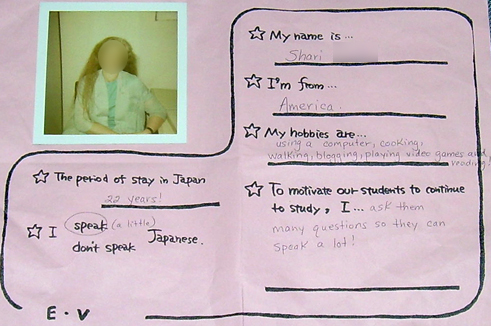
My teaching profile sheet from my last job at an eikaiwa (conversation school). 

Hands down, this is the one thing that I can say without reservation has gotten harder to bear over time. My relationship with my students was not one of friendship or scholarship, but more of a therapeutic one in which I largely functioned as a counselor and they as clients. The biggest part of good therapy is that you listen respectfully, attentively, and with empathy and get people to talk about themselves as much as possible. The biggest part of good conversation teaching is that you listen respectfully, attentively, and with empathy. There is a bond of trust that you build over time that cannot be easily replicated in any other relationship. From my point of view, the teacher and student relationship was better than that of a client and counselor because there was no expectation that I'd solve their problems, but only that I'd improve their English. The latter is a far easier task than the former, and with far less dire consequences if one fails.

The relationship I had with my students was close, deep, and authentic. I miss talking to them and knowing that I was helping them in multiple ways, and I doubt that will ever change no matter how many years pass since my departure from Japan.

Tuesday, March 19, 2013

Won't Miss #512 - dutiful citizen myth

Is that a begging bowl or are you just happy to see me?

In the imaginations of most foreigners in Japan, Japanese people are paragons of civic virtue and foreigners are vile tax dodgers who whine and complain about paying their city taxes, health insurance, and contributing to the pension system. The truth is that most Japanese people do pay their legally-mandated expenses, but only because there is a system in place for salaried employees which leaves them no other choice. The other types of employees, the growing legions of "temporary workers" and the self-employed skip out on as many of these government obligations as possible. In fact, the government even knows they are not paying and shrugs its shoulders and walks away. Numerous Japanese people have told my husband and I that they don't pay their pension fees and when a government worker shows up at the door to collect, they simply say they don't have any money and the worker gives up and goes away.

I won't miss this oft-repeated myth of the perfectly dutiful Japanese citizen in the face of the (more human) reality.

Thursday, January 31, 2013

Will Miss #508 - volunteers when you look lost


In yesterday's post, I mentioned that I got lost during my first trip to Japan and, what I didn't realize at the time was that there was every chance some kind Japanese person would help me. There were many occasions when my husband would pause to look at a map to figure out where we should turn in a new area that we were exploring. We were not lost at those times. He just wanted to get his bearings, but very often a Japanese person who saw him studying the map would stop and, in English, ask if we needed some help finding our way. 

Japanese people are generally pretty insecure about their English language abilities. In fact, I'm certain one of the reasons why people often back away from giving service to foreigners (or scurry away when they see such customers approaching) is fear that the foreign person won't speak Japanese and they'll have to try and negotiate things in English.. The way in which people who are generally afraid to speak English step up to the plate to help someone they believe is lost always impressed me and I miss that. 

Tuesday, November 6, 2012

Will Miss #501 - marriage is a good thing


Throughout my life, marriage has been portrayed in Western culture (especially America) as a burden on men. There are jokes about the "old ball and chain" and the idea that men are giving up their precious freedom if they subject themselves to restrictions of this lifelong commitment. The message is crystal clear, marriage is bad news, particularly for men.

In Japan, the message is greatly different. The culture largely views it as a rite of passage and a means by which people make the transition from prolonged dependence and their status as a child in the family to adulthood. Men and women alike want to marry for the most part and see it as a desirable thing. They look not at the things they are losing, but what they are gaining. And, yes, men actually get more benefits from marriage than women so this is hardly a lie. Do a search and you'll find a variety of perspectives from which this is so including economic gains.

I miss the way in which marriage was portrayed as a positive thing by the people and the society in Japan.

Monday, November 5, 2012

Won't Miss #2 - the herd mentality (reflection)

"Steakhouse Satou" (in Kichijoji) with a huge line of people. For years, this fairly average meat shop has gathered long lines because of word of mouth about the quality of the meatballs they make. Your granny's meatloaf is likely as good or better, but the herd must gather at the proper places.

I grew up in a rural area, and the only types of "herds" I ever encountered consisted of large bovines. I'm guessing the only way my town could have mustered up a crowd would have been for much of the population to show up at the same place at the same time. The way in which Japanese people tended to cluster about a popular place because it was popular with others was something with which I was pretty unfamiliar.

Since returning to the U.S., I have not experienced this sort of thing at all. However, to be fair, I'm pretty sure that part of the reason for that is that I'm in the suburbs most of the time and I think that, if I lived in a big city like New York or Los Angeles, I would certainly encounter places to which people flocked because of buzz.

That being said, I still feel that the way in which people flocked to something relatively pedestrian (like Krispy Kreme in its first year or the meat shop pictured above) was unusual and unusually annoying and I don't miss it.

Tuesday, August 28, 2012

Will Miss #482 - offers of help


The short nature of a title will make this post easy to misunderstand if you don't read the body. Let me say that I don't mean to imply that Americans don't help each other. In fact, it's my feeling that Americans are more likely to pitch in and help each other in most situations because they are not afraid of taking charge of a crisis or problem. In Japan, the Japanese are loathe to help each other sometimes because they don't want to take responsibility for the outcome. The sort of offers of help that I'm talking about are specific to foreigners. If you are obviously foreign and stand around on a street corner or look at a map too long, there's a very high chance that a Japanese person will walk up and ask if they can help you. What is more, they don't just give directions, they often walk with you to your destination to make sure you don't get lost. They usually do this in English, which is what makes it all the more impressive.

From all of the stories that you've heard (from me and possibly others) about Japanese psychology, you may realize that they are often intimidated by foreigners and insecure about their second language skills. Despite these things, people will still go up to a foreigner who seems to be confused or lost and offer to help. Knowing that these offers require a Japanese person to overcome reservations that are unique to their culture makes their offers of assistance all the more impressive as acts of random kindness, and I will miss the experience as viewed through that perspective. 

Monday, August 20, 2012

Won't Miss #480 - Edokko personalities


Before I get into this, let me say that I know and love many wonderful individuals who were born and raised in Tokyo. That being said, when you deal with the residents en masse, and as strangers, a certain character picture develops. Edokko (or people born and raised in Tokyo) tend to be reserved, feel they are more sophisticated and proper in their speech, and less welcoming of strangers and their differences. They also tend to be more self-involved and slow when walking around public spaces and are much more likely to gawk at the gaijin. Not every person in Tokyo is like this, not by a long shot, but enough fit this character in general to make them harder to live with. Honestly, I found that the people in Kobe and Osaka were a lot less annoying when I traveled in those cities.

I won't miss the generally unwelcoming character of people in Tokyo and how it makes living in the city more stressful and isolating.

Wednesday, May 30, 2012

Will Miss #453 - shiny happy people

My shiny, happy bit of Japan that travels with me, debu neko in the San Juan Islands.

One of the things about America that seems to have happened since the 60's is that being positive and happy is seen as a negative thing. People enjoy bursting bubbles and being cynical and sarcastic is elevated above being peppy and positive. It's just not cool to be happy and anyone who overtly displays it is seen as covering something up, having a mental health issue, or just being plain too dumb to realize the awfulness of life. Newspaper articles and blog posts remind you constantly that whatever you feel good about doing is actually bad for you and, incidentally, that good news you just heard isn't really all that good. Frankly, relentlessly positive people annoy me, but the negative nature of many Americans is just as much if not more annoying. Generally speaking, in Japan, being "cheerful" and positive is seen as a good thing and sarcasm is not considered a good form of communication.

I miss the overall focus on people trying to be more positive than negative that I experienced in Japan. It created a different energy when you were around people and was pleasant to be around. 


Wednesday, May 9, 2012

Will Miss #446 - Osaka personalites


If you've lived in Japan long enough, and especially if you have lived in Tokyo as I have, you know the instant you are dealing with someone who was born in Osaka. The way in which they communicate with you is faster, freer, and more friendly. When you visit the city of Osaka, people walk faster and look where they are going (as opposed to Tokyo where they are oblivious to all and sundry) far more often than in Tokyo and they're far less likely to stare at foreigners. When I do English level tests by phone, I know immediately if someone is from Osaka. Since we're speaking in English, there's no accent or appearance to betray their origin. It's pure character.

People from Osaka are refreshingly more akin to what Americans are used to in terms of personality while still retaining many of the very best aspects of the Japanese character, and I'm going to miss talking with Osaka-ites.

Thursday, April 5, 2012

Won't Miss #435 - long lines (qualified)


I understand that there are long lines everywhere at popular attractions around the world. This is a given and Japan's long lines at places like Tokyo Disneyland are understandable.What is less understandable is the random long lines at little places at which there is no special product or limited supply. In the picture above, some sundry goods are being sold in front of Ito Yokado. There was nothing unique about them and the prices weren't spectacular, but there is a tendency in Japan for people to join a line simply because other people are in the line. I've spoken with more than one person who has said that they figure that, if people are lining up for it, it must be good so they'll get in line, too. Sometimes, I think that stores actually intentionally create lines in order to drum up business because they know about this attitude.

Sometimes I just want to buy something and move on and when the place I want to go to is afflicted with these sorts of lines, it can be very frustrating. I won't miss the random long lines at places at which it makes no sense for them to have a line.

Thursday, March 8, 2012

Will Miss #425 - "sojourning"


One of the things my husband and I love to do is pick an area of Tokyo or the surrounding cities (Yokohama, Saitama, Chiba, etc.) and just explore it. Sometimes, it's one of the major areas that is attractive to tourists or locals, but at others, it's just some minor stop which isn't particularly well-known or famous. Taking a day and spending hours (sometimes as many as 6 or 8) just walking around the streets of these areas is a grab bag of experiences. You see little shops that you'd never see anywhere else or homes that have a unique flavor. There are restaurants that others may not recommend as they're tucked away in a place far away from some obscure train stop. It also allows for a form of people watching that doesn't necessarily come naturally from living in a big city as you see people doing things in their local neighborhoods that they don't do when out shopping or commuting. The density of the city areas in and near Tokyo (as well as other cities, I'm sure) provides a rich opportunity for maximum exposure to culture and experience in a minimal distance.

I love taking these long walking tours around areas both big and small and just paying close attention to what people, places, and things have to offer in Japan, and I will miss taking these sojourns.

Wednesday, February 8, 2012

Will Miss #415 - unescorted children


The little boy pictured above got on the JR (Japan Railway) train when I was headed to work in the early afternoon one day. He bounced around the car a bit and I realized that he was all alone and that this was not a rare situation. Little kids in Tokyo ride the train alone as well as walk around various neighborhoods. Kids in Tokyo can do this because there is little fear of child abduction in Japan. 

I will miss living in a culture in which small children can walk around without an adult because it is safe enough for them to do so.

Thursday, January 5, 2012

Won't Miss #404 - the superiority thing


The flip-side to the lingering inferiority complex that the Japanese people have about their position relative to Western cultures and China is the superiority complex about Asia. There is an interesting contradiction displayed in regards to China in particular. The Japanese frequently criticize all things Chinese from the lack of order as demonstrated by not lining up to the rudeness to the food quality and safety to the cleanliness yet they fear China is going to eclipse Japan economically. The sense that Japan is not even a part of Asia and is above other Asian countries has become somewhat muted as the economy has behaved like a slowly sinking ship since the bubble burst, but it is still there.

I won't miss the superiority complex that some Japanese people display when speaking of other Asian countries. 

Tuesday, January 3, 2012

Won't Miss #403 - the inferiority thing


Japan has the third largest economy in the world with the 10th largest population. Tokyo leads the world's major cities in patent applications. The country is known for its superior technology. Their cars dominate the automobile market. Japan is a very small country with almost no natural resources. The fact that their food, pop culture, and products are known and desired and that they are an economic force to be reckoned with is amazing in light of their size and circumstances. Despite all of this, Japanese people, by and large, have an enormous inferiority complex. They fret about being eclipsed by China economically. They talk how they have shorter legs than Westerners and flatter noses as if these were signs of some sort of inadequacy on their part. They note every loss in an international athletic event as an indication of their inferiority. I encounter a steady stream of people who think Japan is weak and inadequate to every Western nation and China.

Japan is an amazing country that has accomplished a great deal with many disadvantages and I won't miss the lingering inferiority complex that people display despite their many achievements. 

Friday, November 18, 2011

Will Miss #388 - husband thanking

This is actually a thank you sign at a rikshaw ride, but it's the only picture I have with the words "thank you" on it in English.

There's a custom/habit in Japan which sometimes receives a little flak from more feminist-oriented types, and no small resistance from at least a handful of the foreign wives of Japanese men. This custom is one in which wives thank their husbands for going to the office and earning money to support the family. The problem with this custom through Western eyes is that it comes across as the woman thanking her "master" of a husband for his contribution, while hers may go unrecognized. I don't know how it tends to work in each individual family, but I do think that it is a good custom in general. My husband is American, and I often express gratitude to him for working while I work part-time and do the housework, and he also thanks me for all I do to make life better for both of us.

I think that recognizing that a particular contribution is of value increases the chance that both parties will understand each other's contributions and that there is nothing subservient or anti-feminist about thanking the breadwinner for subjecting himself (or herself) to the daily grind while the other party looks after the home front, and I'll miss that.

Monday, November 7, 2011

Won't Miss #384 - Japanese (whatever) is "better"

Even the frozen French fries are better in Japan because, you know, they mix them with mini-weenies. 

Upon returning from a trip to Hawaii, one of my students asked me if I thought Japanese watermelon was sweeter than American watermelon. My truthful reply was that I've had sweet melon in both countries and relatively tasteless stuff in both of them. I've probably had more so-so watermelon in Japan simply because I've been an adult here longer and bought more of it. My student looked shocked at this reply and said that she really thought Japanese watermelon was "better". I will grant one thing; Japanese watermelon has a different taste and smell. It's not "better", but is absolutely "different". It's like American and Japanese pumpkin. Both are good, but have unique properties and need to be prepared differently to suit their strengths, but Japanese people are always telling me that all things Japanese are superior to all things American.

The bottom line is that we tend to like things the way we're used to them. It's entirely subjective, and it's tiresome hearing people say that everything from the food to the furniture design to the way in which people communicate is "better" in Japan than America, and I won't miss it.

Thursday, November 3, 2011

Won't Miss #383 - okonomiyaki


In theory, I should love okonomiyaki. Well, I should love it as much as you can love a food that looks like someone hurled the contents of their dinner onto a grill. For a society so obsessed with the appearance of food, it's surprising that this "Japanese savory pancake" is so popular. Okonomiyaki is a food that is prepared "as you like it", so you can customize the composition. Unfortunately my first experience with this particular dish was one of those typical negative experiences that foreigners have in Japan. I was in Japan visiting my then-boyfriend (now husband) and one of his students wanted to go for a meal with us. She arranged a time and date and met us at an okonomiyaki place. She chose the cuisine without consulting us about our tastes, but we were both relatively new to Japan and figured we'd go with the flow. All proceeded as planned except she showed up with 4 friends who didn't speak English and they proceeded to giggle and carry on in Japanese 95% of the time. She essentially wanted to show off having gaijin "friends" to her Japanese friends and ambushed us with a crowd of people who thought we were entertainment to accompany their meal, not actual human beings with whom they had to behave graciously. 

I didn't care for the (too fishy) okonomiyaki that I had during that titter-fest and though I'm sure that I could custom order a version I'd enjoy, I will forever associate it with an early experience with extremely rude behavior that showed some of the worst Japanese people can sometimes offer foreign visitors. 

Tuesday, September 27, 2011

Won't Miss #370 - being told what is "Japanese"


I'm going to blow your mind, and very likely piss you off when I say that Japanese people do not know Japanese culture by virtue of being born in Japan. Don't believe me? Next time the Golden Week holidays roll around, ask your friends what each day celebrates and how it is observed. Or, ask them what a mikoshi is/does. Being of a culture is not the same as being educated in it and sometimes it's frustrating to have people lecture me when they clearly don't have a clue. For instance, an Japanese gent of 77 asked me if I like Japanese food. I told him that I like it, but not all of it. In particular, I won't eat uncooked meat or fish (as I was raised to feel it was dangerous to even consume slightly rare food and it nauseates me). He said, 'then you don't like Japanese food because sushi and sashimi are the core of Japanese cuisine'. To this, I say that if you're going to reduce an entire country's cuisine to one or two dishes, then I don't like any country's cuisine, especially America's which supposedly revolves around beef and potatoes (the former which I never eat and the latter which I rarely eat). Besides, sushi originally was salted and fermented fish, not what the Japanese eat today, and it is defined by the inclusion of vinegar and rice, not raw fish parts. The bottom line is that you have to be interested enough and attentive enough to what is going on to really understand any culture, including your own. It's not enough to exist in it and sleepwalk through it without ever applying some mental energy to research and thinking things through.

I won't miss being told what's what in Japan by people who feel that they know everything merely by birthright.